

An Interface Management Plan defines a project's interface execution strategy and formalizes the governance of a project's interface management process. The plan specifies how a project will identify, manage, and resolve interfaces throughout delivery. On a major project, it aligns teams on responsibilities, technical requirements, processes, communication, reporting, escalation, and change management at critical handoffs. The goal of the interface management process is to prevent scope gaps, integration issues, delays, and other errors caused by misalignment between contracting parties. The Construction Industry Institute defines interface management as managing the communications, relationships, and deliverables among two or more interface stakeholders.
For complex projects, a purpose-built solution such as Coreworx Interface Management can support the project's interface management plan by helping delivery teams formerly align at interfaces.
Jump to
-
Why Do Major EPC Projects Need an Interface Management Plan?
- What Must the Interface Management Plan Include?
- How Can Project Teams Successfully Implement the Interface Management Plan?
- Case Study: Interface Management Plan in Action
- Final Thoughts
Why do major EPC projects need an interface management plan?
Major engineering, procurement, and construction (EPC) projects need an Interface Management Plan (IMP) to define the interface management process all team members will follow to consistently coordinate the technical and organizational boundaries between delivery teams, contractors, systems, and work packages on a project. By defining how project interfaces will be identified, assigned, communicated, and resolved, the plan helps projects ensure the consistent application of their interface management process, which helps to reduce gaps, integration issues, or other errors at interfacing points that often lead to rework, delays, and additional costs.
Based on interviews covering 46 projects, CII found that “projects with a low level of IM implementation tended to have higher and more dispersed cost growth—as well as more outliers (e.g., excessive cost growth)—than did the projects with high IM implementation.”
Additionally, a CII-hosted industry presentation quantifies this difference as 18% average cost growth for projects without formal interface management, compared with 4% for projects with formal interface management. On a multibillion-dollar project, a cost-growth difference of this scale can represent hundreds of millions of dollars in financial exposure.
A defined Interface Management Plan ensures a consistent interface management process is followed and gives project owners and delivery teams a shared framework for managing interface risks.
"Projects don't go wrong, they start wrong."
Bent Flyvbjerg,
Heuristics of Masterbuilders, (discussing adequate front-end planning)
What must the interface management plan include?

The Interface Management Plan defines your interface execution strategy and should include the following:
1. Project Overview & Interface Objectives
Interface Management Plans start with a project overview, then continue to describe the objectives of the interface management program. For example, objectives may include:
- Define & agree on the contractors' and the company’s responsibilities with respect to interfaces
- Provide a framework and clear process to identify and manage interface and system integration issues
- Maintain technical integrity for systems crossing contract boundaries
- Ensure technical data is shared in a consistent, timely, and efficient manner between all parties
- Ensure there are no gaps or overlaps associated with the project scope
- Avoid interface omissions or duplications
- Avoid potential disputes between interface stakeholders
As a bonus, you begin to develop a culture of shared ownership. Delivery teams have a shared goal of meeting the project objectives. Teams understand the end goal, what the plan is to achieve this goal, and how their contributions impact this goal.
2. Procedures for Managing Interfaces
Policies and procedures are defined to ensure all stakeholders understand how interfaces (both internal and external) are identified, tracked, and managed to completion. This section provides clear instructions that lead to consistency in how interfaces are managed, issues are raised, and conflicts are resolved. It also includes the communication strategy, reporting requirements, and escalation procedures.
Topics covered in this section include:
- Interface Numbering
- Interface Management Process
- Project Interface Management System (IMS)
- Identifying New Interfaces
- Interface Agreement Process
- Change Management Process for Interfaces
- Interface Meetings
- Conflict Resolution
A purpose-built system such as Coreworx can support this process by providing a shared environment for tracking interface records, responsibilities, and action status.
3. Roles and Responsibilities of Key Stakeholders
Defining roles and responsibilities sets expectations and outlines who is responsible for what, not only for the external delivery teams but also for company responsibilities. To manage interfaces, contractors are designated as either the Lead or Interface Contractor with responsibilities defined specific to each depending on the interface. Responsibilities can include the following:
- Attending regular interface meetings (along with information regarding meeting frequency and attendee expectations)
- Ensure information recorded in the Interface Register is up-to-date, accurate, and complete
- Communicate and cooperate with other contractors on all interface issues to ensure overall design integrity and performance of the overall shared system
- Propose effective solutions or additional scopes of work for the interface activities where inputs are not available
- Create and maintain all design documentation (drawings, engineering lists, schedules, specifications, etc.) related to their scope of work for the shared system
- Participate in process reviews, as required, and ensure resolution of comments that relate to their scope area
- Provide access to interfacing contractors for inspection/testing where and when required
- Appoint Interface Coordinator/Manager responsible for interface process maintenance, communication, coordination, and reporting.
4. Interface Scope Matrices and/or Registers
The interface matrix defines scope boundaries at a high level; it identifies who interfaces with who and can be defined by scopes of work and by discipline. The interface register is a table listing the interface points (defined to date), each with a description, defining attributes, and a summary of responsibilities for the various project phases, including design, procurement, construction, and pre-commissioning. When a contracting party is awarded the contract, all the identified interface points and related information is transferred to that party.
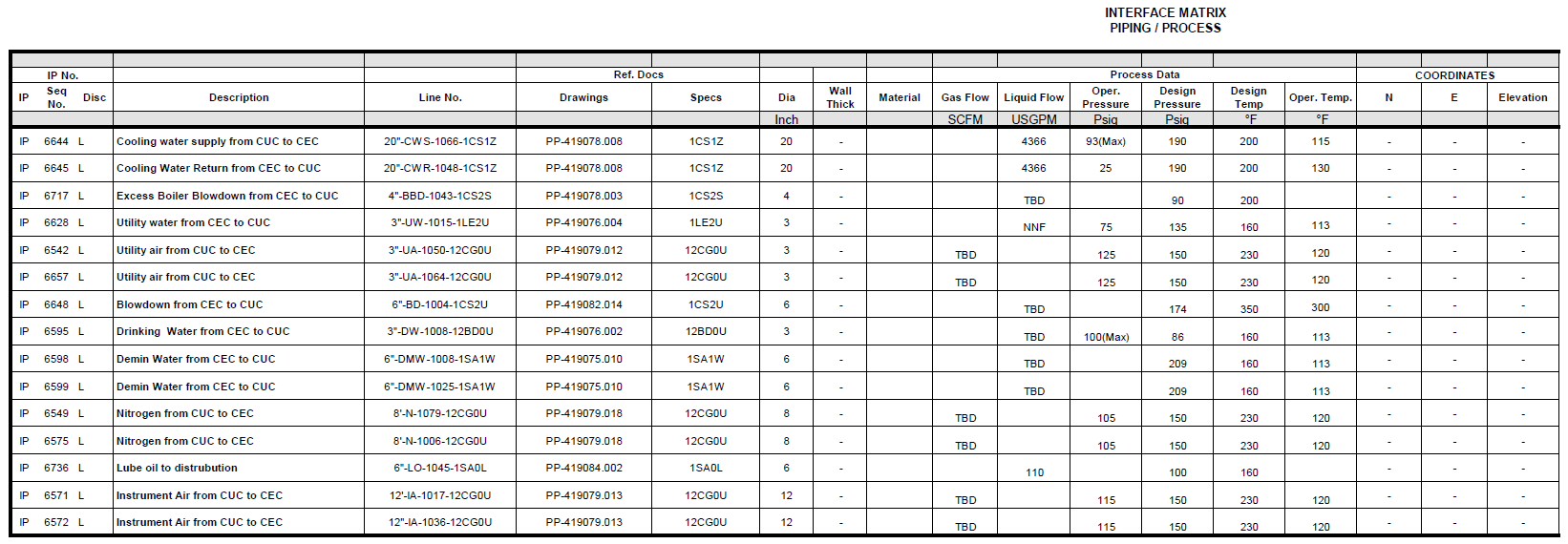
Figure 1 Sample Interface Matrix for Project Interface Management
Coreworx can help maintain the interface register as a controlled working record, supporting visibility into interface status and responsibilities throughout the project.
5. Key Definitions and Terms
With global projects, including definitions, acronyms, and terms is key to ensuring understanding. Implementation of interface management programs still varies from industry to industry with common definitions and terminology nuances. Even the definition of an interface can vary from one project to another. With globally dispersed project execution the norm, definitions help to ensure that everyone is "speaking the same language" (Morgan, J. E. (2000) "Speaking the same language.")
A Living Document
The Interface Management Plan is a living document that will continually evolve. You must regularly reassess it to ensure the actions you are currently taking contribute effectively to the end goal. Foster active discussions during your global kick-off meeting and on a regular basis. Listen to the feedback of your interface delivery teams and adjust as needed.
As the plan evolves, Coreworx can help keep interface records, responsibilities, and action status aligned with the current delivery approach.
How can project teams successfully implement the interface management plan?
Implementing a successful interface management practice begins by completing an Interface Management Plan that formalizes the governance of your practice. Plans are the starting point of all projects, but the degree and quality of the planning may differ and can be cut off prematurely in the wrong belief that it will save time. Taking the time to plan will drastically improve the chance of success overall – for budget, quality, safety, and time.
"All that happens if you hit the ground running is you fall. A good start is a slow start, with time to think things through before delivery, so you don't fall. Thinking is cheap while action is expensive."
Bent Flyvbjerg,
Heuristics of Masterbuilders
Case study: Interface management plan in action
During Phase 1 of the Heydar Aliyev Oil Refinery (HAOR) modernisation in Azerbaijan, the project faced numerous tie-ins to the existing facility, high-risk interfaces between EPC contractors, and a growing communication matrix.
The lead EPC selected Coreworx Interface Connect after using it successfully on another project. This gave the interface management plan a practical operating framework: one interface register improved owner visibility, kept information official and accountable, and supported consistent data capture and interface queries.
The project team also benefited from importing and exporting interface management data, enabling SOCAR to achieve Phase 1 goals related to managing interface risks.
Key takeaways
-
An Interface Management Plan defines a project's interface management process
- Taking the time to plan will drastically improve the chance of success overall – for budget, quality, safety, and time.
-
It establishes the governance, responsibilities, procedures, and terminology needed to manage project interfaces consistently
-
Defining the interface plan early helps delivery teams prevent scope gaps, overlaps, integration issues, disputes, and avoidable impacts on cost, quality, safety, and schedule
-
Effective plans define interface objectives, management procedures, stakeholder responsibilities, scope matrices or registers, communication processes, escalation routes, and change management
-
A plan should remain a living document, regularly reassessed and updated as project conditions, interfaces, responsibilities, and delivery requirements evolve
-
Clear definitions and shared ownership help global delivery teams align across disciplines, reduce coordination risk, and support repeatable project outcomes
Final thoughts
Adopting a formal interface management process is essential to mitigating interface-related risks to your project. Interface management formalizes collaboration across shared scopes of work. It also acts as your early warning system, establishes your governance model, and develops repeatable processes to be used on future projects.
To help you get started on a new IMP or to optimize an existing plan, download our Interface Management Plan Outline, which we developed based on our 15+ years of helping companies implement successful interface management solutions.
Updated August 2026